Is Artificial Intelligence a Friend or Enemy?
Understanding the technology that is changing our world.
Introduction
Imagine a world where a computer can answer your questions, translate different languages, recognize faces, create pictures, write stories and even help doctors identify diseases. Does this sound like science fiction? Surprisingly, it is already happening!
Welcome to the world of Artificial Intelligence, commonly known as AI.
Artificial Intelligence is one of the most exciting technological developments of our time. From smartphones and online shopping to education, healthcare and space exploration, AI is becoming a part of our everyday lives.
But an important question arises: Is Artificial Intelligence our friend, helping us build a better future, or is it becoming a threat to humanity?
Let's explore both sides.
What is Artificial Intelligence?
Artificial Intelligence is a technology that enables computers and machines to perform tasks that normally require human intelligence.
These tasks include learning, problem-solving, understanding language, recognizing images and making decisions.
For example, when your smartphone recognizes your face, when a navigation application suggests the fastest route, or when a chatbot answers your question, AI may be working behind the scenes.
AI systems learn patterns from data and use those patterns to generate responses, make predictions or perform specific tasks.
However, AI does not think or understand the world exactly like a human being. Its abilities depend on how it is designed, trained and used.
Artificial Intelligence as a Friend
Artificial Intelligence has the potential to make human life easier, safer and more productive.
1. A helpful learning companion
AI can help students understand difficult subjects, practise languages, solve problems and explore new topics.
A student who struggles with mathematics can use AI-powered learning tools to receive explanations and practise questions at their own pace.
It can also help teachers prepare learning materials and identify areas where students need additional support.
2. Improving healthcare
AI is helping medical professionals analyse medical images, identify patterns in health information and support disease detection.
It can assist doctors in making informed decisions and help researchers develop new treatments.
However, medical decisions must remain under qualified professional supervision.
3. Making everyday life easier
Many everyday services use AI to save time and improve convenience.
Examples include voice assistants, spam filters, translation applications, navigation systems and personalized recommendations.
4. Helping solve environmental problems
AI can support weather forecasting, monitor forests, identify pollution patterns and improve energy management.
It can help researchers understand environmental changes and develop solutions to protect our planet.
5. Encouraging creativity and innovation
AI tools can help people explore ideas, design artwork, create music, write drafts and develop new projects.
For students, these tools can open new opportunities to experiment and express their creativity.
Artificial Intelligence as a Potential Enemy
Although AI offers many benefits, its misuse can create serious challenges.
1. Overdependence on technology
If students use AI to complete every assignment without understanding the subject, they may stop developing their own thinking and problem-solving abilities.
Technology should support learning, not replace it.
2. Risk of misinformation
AI can sometimes generate incorrect information while presenting it confidently.
People who believe everything they see online without checking facts may be misled.
Therefore, verifying information through reliable sources is essential.
3. Privacy and data security
AI systems may process large amounts of personal information.
If data is collected or used carelessly, it can create privacy and security risks.
We should always be careful about sharing personal information online.
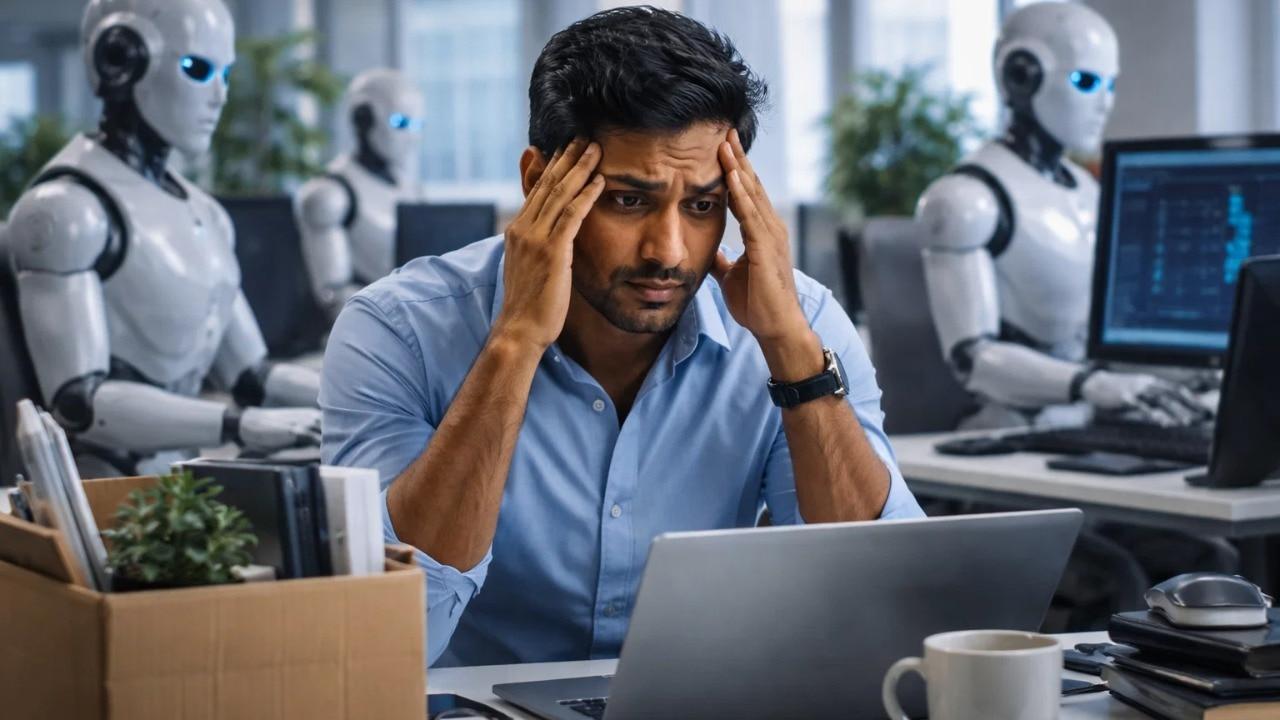
4. Changes in employment
AI and automation are changing the way many industries work.
Some repetitive tasks may be automated, while new career opportunities are emerging in technology, data science, robotics and other fields.
Instead of fearing every technological change, students should develop new skills and prepare for the future.
5. Fake images and videos
AI can create realistic but fake images, voices and videos.
Such content can be misused to spread rumours, damage reputations or deceive people.
Learning to identify misleading digital content is becoming an important life skill.
Should Students Be Afraid of AI?
Absolutely not!
Students should understand Artificial Intelligence rather than blindly fear it or depend on it.
The future will need people who can use technology responsibly, think independently, communicate effectively and solve real-world problems.
Here are five habits every student should develop:
- Use AI to understand concepts, not simply copy answers.
- Verify important information before believing or sharing it.
- Develop independent thinking and creativity.
- Protect personal information and respect online privacy.
- Learn digital skills and stay curious about new technologies.
Remember, a calculator does not make mathematics useless, and a dictionary does not make language learning unnecessary. Similarly, AI should be treated as a tool that supports human intelligence.
The Importance of Human Intelligence
Artificial Intelligence may process information quickly, but human beings bring qualities that technology cannot fully replace.
Kindness, empathy, moral responsibility, emotional understanding and personal experiences are important parts of human life.
A machine may help a doctor analyse medical information, but compassion and responsibility remain essential in caring for a patient.
AI can suggest solutions, but humans must consider whether those solutions are fair, safe and beneficial for society.
The future should not be about humans competing against machines. It should be about humans using technology wisely to achieve greater things.
Conclusion: Friend or Enemy?
Artificial Intelligence is neither automatically a friend nor automatically an enemy. Its impact depends largely on how human beings develop, control and use it.
When used responsibly, AI can become a powerful friend that supports education, healthcare, science and innovation.
When misused, it can create problems related to privacy, misinformation, employment and human dependency.
The real challenge is not simply to create smarter machines, but to develop wiser human beings who know how to use them.
As students, we must prepare ourselves for a world where technology will continue to evolve.
Let us not become servants of technology. Let us become responsible creators and users of it.
Because the future will not belong to Artificial Intelligence alone. It will belong to those who know how to combine technology with human wisdom.